My Experience with ACMP — Connecting the Dots in Cloud Architecture
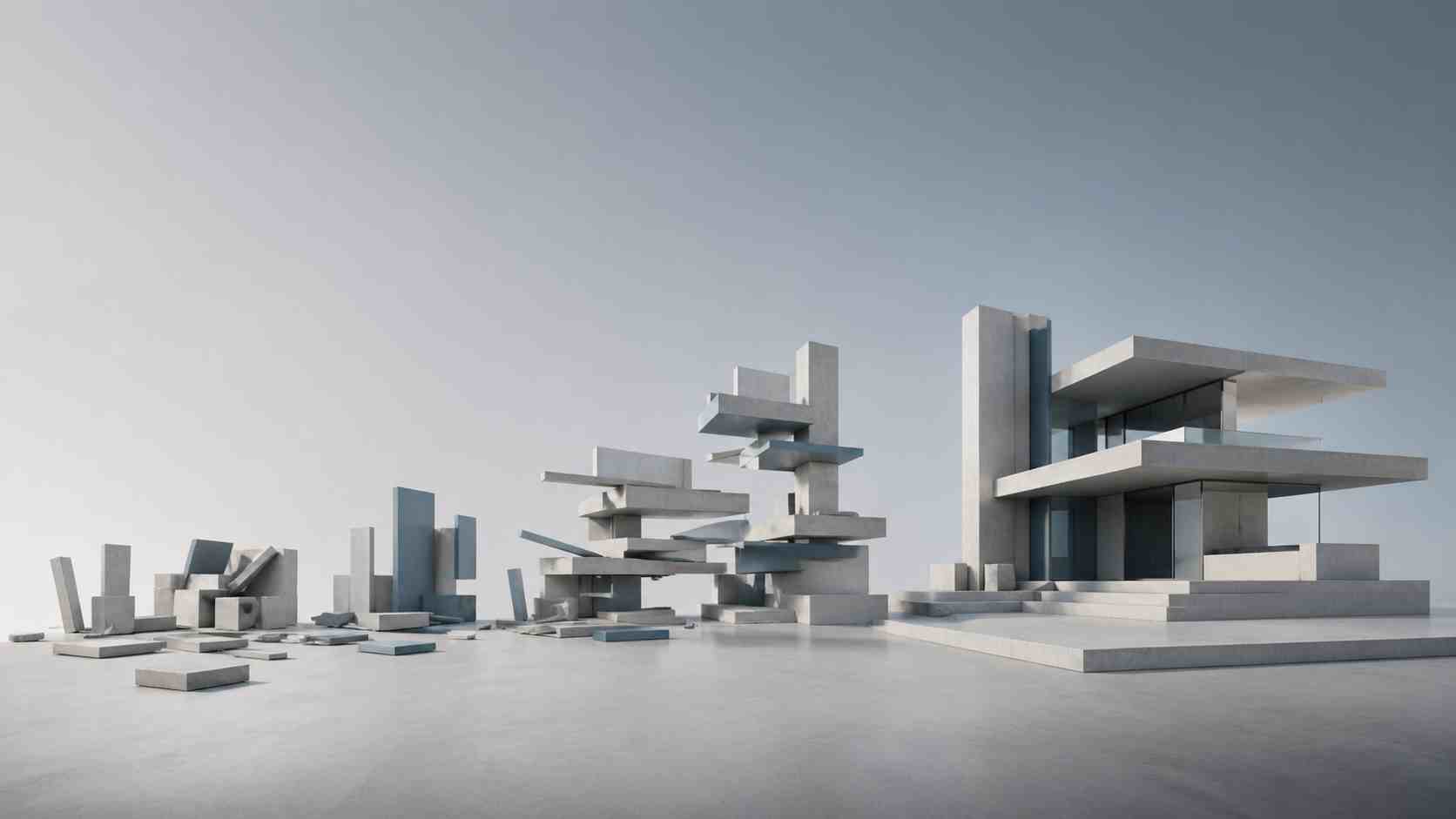
Over the past six months, I made a deliberate decision to change how I approached learning AWS.
I wasn’t starting from zero. I had already been working in the cloud, learning services, and studying for certifications.
But there was still a gap.
It wasn’t about knowledge—it was about confidence in the completeness of my understanding.
I didn’t want to keep moving forward while wondering if I had missed something foundational. I didn’t want to rely on memorization or fragmented learning. When it came time to speak about architecture or make decisions, I wanted to know I actually understood what I was doing.
That’s what led me to the Advanced Cloud Mastery Program (ACMP) through Need for Cloud, created by Riyaz Sayyad.
What Makes ACMP Different
ACMP isn’t just another course—it’s a structured path.
The key difference is simple: everything connects.
Instead of learning services in isolation, the program builds understanding layer by layer:
- fundamentals
- architecture patterns
- real-world scenarios
- hands-on implementation
Across the program, I worked through 75+ hands-on labs, each building on the last—from foundational concepts to full, production-style architectures.
That was reinforced through a combination of:
- guided video sessions
- detailed walkthroughs
- supporting reading material
So it wasn’t just about doing the work—it was about understanding why it works and when to apply it.
Another aspect that made a real difference was the live interaction. The program includes regular sessions with the community and with Riyaz himself. These weren’t just walkthroughs—they were opportunities to ask real questions, break down decisions, and understand why things are done a certain way.
That helped bridge the gap between knowing a concept and actually understanding how to apply it.
What I Actually Built (and What Changed)
A big part of this program is hands-on work—not just small exercises, but full scenarios that reflect real-world systems.
Designing Secure, Layered Network Architectures
One of the early labs involved building a complete VPC from scratch.
This included:
- public and private subnets
- route tables and gateways
- EC2 instances across layers
- IAM roles and security groups
But the real shift was around access design. Instead of exposing everything, private instances had no public IP, SSH access was restricted or removed, and access was handled through IAM and AWS Systems Manager.
That changed how I think about infrastructure. Security became part of the design from the start—not something added later.
Building Auto-Scaling Container Architectures
I worked through deploying a production-style containerized application using ECS Fargate. This included containerizing applications with Docker, pushing images to ECR, configuring load balancing with ALB, implementing auto scaling based on demand, and integrating secrets and shared storage.
But more importantly—I tested it. Under load, I could watch services scale out, traffic distribute across tasks, and the system stabilize in real time.
That’s when scaling stopped being theoretical and started feeling real. Those same building blocks show up in my own work now—for example, MetaInspect Containers follows the same end-to-end design: load-balanced Fargate services, a clear split between the edge and the workload, and private networking in between.
See the architecture and full details → MetaInspect Containers
Applying These Patterns in My Own Work
The program didn’t end at containers. I also began shaping serverless and API-first designs with the same discipline around scalability, automation, and clean boundaries.
One example is MetaInspect Serverless—built as a direct extension of what I was practicing, not a separate track from the labs.
See the architecture and full details → MetaInspect Serverless
Building Observable Serverless Systems
Another major area was serverless architecture. I built a microservices-based application using API Gateway, Lambda, DynamoDB, and CI/CD pipelines with CodePipeline and CodeBuild.
But the most important part wasn’t just building it—it was observability. Using CloudWatch, structured logging, and X-Ray, I could trace requests across services, analyze logs in detail, identify performance bottlenecks, and debug issues with real visibility.
This led to a key realization: building systems is only half the job—understanding how they behave is just as important.
Designing Real-World Migration and Hybrid Solutions
Not everything starts in the cloud.
I worked through a hybrid scenario where an on-premises file system was migrated to S3 using managed AWS services, while still maintaining compatibility with existing systems. This showed me something important: cloud architecture isn’t always about starting fresh—it’s often about designing the transition.
Modernizing Applications Instead of Replacing Them
One of the most realistic scenarios was modernizing an existing application. Instead of rebuilding everything, the backend stayed intact, the frontend was containerized, and the system was evolved incrementally.
The architecture moved from EC2-based deployment → containerized services with ECS Fargate → fully integrated into a CI/CD pipeline. That shift introduced a much more practical mindset: systems evolve over time—they’re not rebuilt all at once.
Bringing It All Together — Real Projects
Projects like HeatFX gave me a way to apply these ideas in practice—bringing together serverless architecture, event-driven design, and scalable system patterns in a real system.
See the architecture and full details → HeatFX Serverless
What stood out wasn’t just the tools—but how naturally the architecture came together.
What the Process Looked Like
This wasn’t something I rushed through.
Over the past six months, I stayed consistent—setting aside time each day to work through the material, build, and actually understand what I was doing. Some days it was focused lab work, other days it was going back through concepts until they made sense.
I even added a small reminder on my desk—a simple plaque with my name and the program—to keep that goal visible. It sounds small, but it reinforced something important: this wasn’t just about completing a course—it was about building a foundation I could rely on.
That consistency is what made the difference.
What Actually Changed for Me
Before
- Learning services individually
- Preparing for exams
- Understanding concepts—but not always how they connected
After
- Thinking in terms of systems and architecture
- Understanding how services fit together
- Evaluating trade-offs (cost, security, scalability)
- Reasoning through problems instead of memorizing answers
And most importantly, I feel confident explaining and designing solutions—not just following them.
Who This Is For
If you’re working in tech or cloud, studying for AWS certifications, or feeling like you understand pieces but not the full picture—this kind of structured approach makes a difference.
It’s not about learning more. It’s about understanding better.
Final Thoughts
After six months, this has been one of the most valuable learning experiences in my career. Not because of any single service—but because it changed how I think.
It took everything I was learning and connected it into a complete picture. And in cloud architecture, that’s what actually matters.
If you’re serious about cloud and want a structured path that focuses on real understanding—not just passing exams—the Advanced Cloud Mastery Program is worth looking into. You can find more information at needforcloud.com.